


In this interview, Jéssica Freira dos Santos Veras discusses the study’s objectives, methodology, and main findings, highlighting how aporophobia can manifest in primary health care, affect care for socially vulnerable populations, and challenge health professionals’ practices.
What does this term mean?
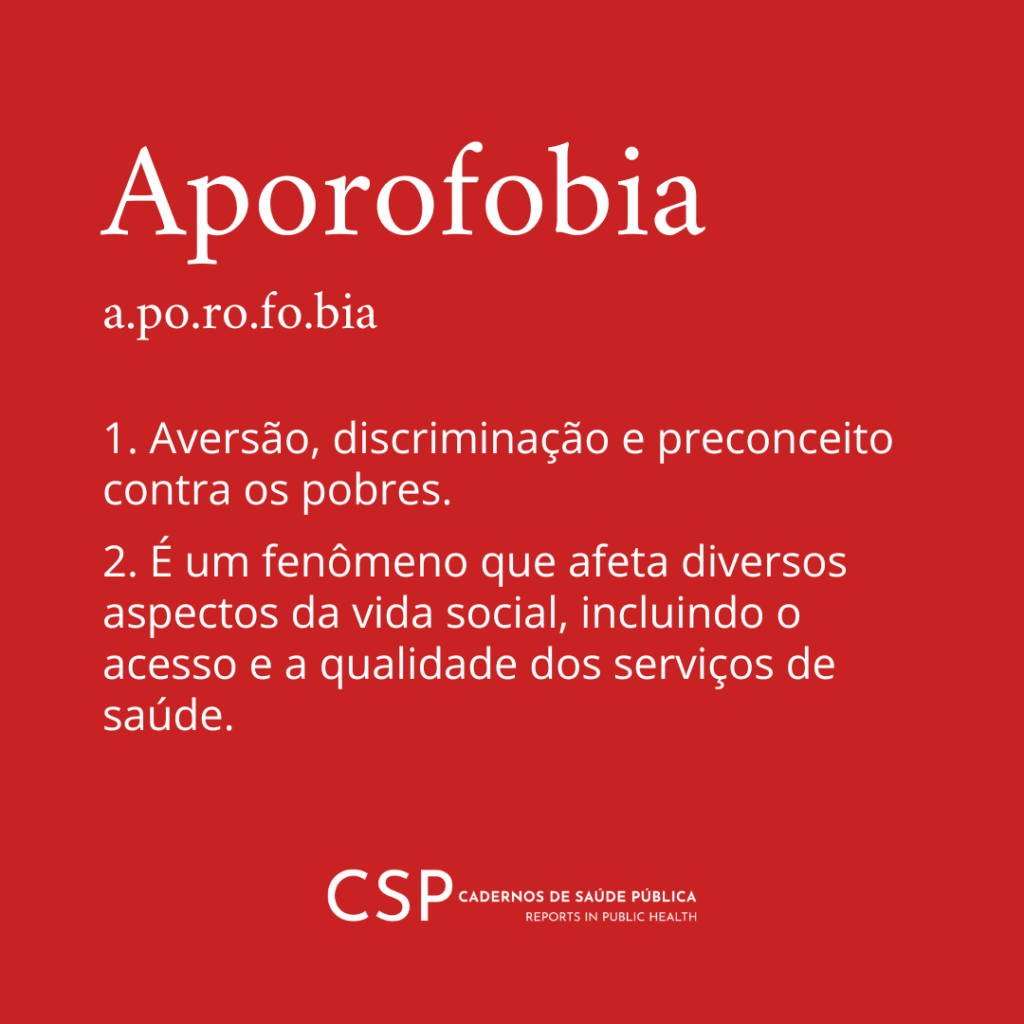
Aporophobia is a term that refers to aversion, prejudice, and discrimination against the poor. Aporophobia is present in various aspects of our social life, including our health care services.
What was the guiding question for this article?
What is the perception of higher-level professionals in Fortaleza’s Family Health Strategy regarding aporophobia in health care? This question aimed to explore the concept of aporophobia among professionals with advanced degrees working in Fortaleza’s Family Health Strategy, identify whether instances of aporophobia occur during these professionals’ patient interactions, and understand how aporophobia might interfere with access to healthcare for Fortaleza’s socially vulnerable population, from the perspective of these professionals.
How was the research conducted? What was its methodology?
The study was conducted between January and April 2024 and involved two distinct phases. In the first phase, quantitative data were collected through an exploratory study, which intentionally guided participants toward the second phase, which was based on qualitative research. The study was approved by the Research Ethics Committee of the University of Fortaleza.
What are the main findings you would highlight?
Regarding the main findings of our article, we understand that aporophobia is a phenomenon present in the context of primary health care and that it manifests itself in various ways, ranging from more subtle attitudes to more explicit behaviors. Furthermore, healthcare professionals reported difficulty recognizing or addressing poverty in the healthcare context, given other demands and the complexity of work in primary healthcare, as well as pressure for productivity and care demands. This tends to steer practices toward resolving immediate healthcare problems. This situation hinders the identification and addressing of aporophobia in comprehensive health care. Patients’ health conditions are also linked to their social vulnerability. Therefore, it is necessary to integrate these aspects into health care and new care strategies. The new findings indicate that socially established prejudices directly influence professionals’ perceptions, affecting the way they act.