


A study examines the arduous journey of a group of women seeking the right to terminate a pregnancy following rape. Most are in vulnerable situations, and the average distance traveled is 1,000 km. Why it is urgent to ensure that nurses perform the procedure
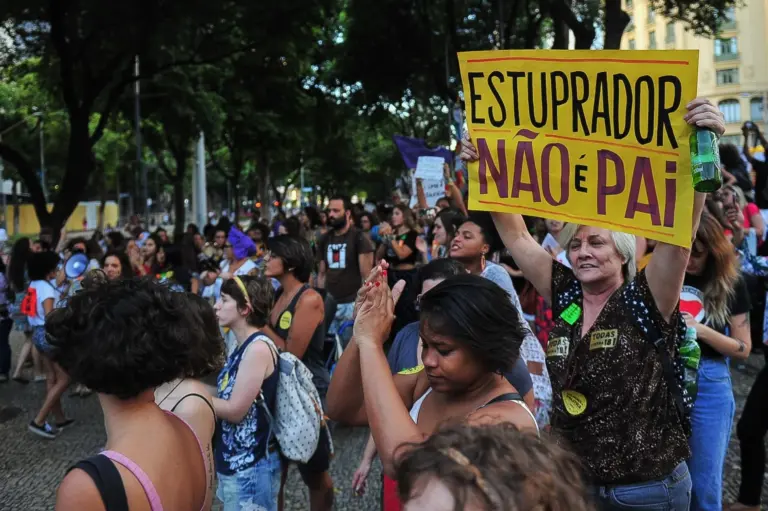
Even with the right to legal abortion guaranteed in cases of rape, fetal malformation, and risk to the pregnant woman’s life, fewer than 4% of Brazilian municipalities offer the service through the public health system. As a result, women, young people, and children who are victims of sexual violence—or adults facing life-threatening pregnancies—endure real hardships to access a simple procedure. An article published in Cadernos de Saúde Pública—a journal affiliated with ENSP/Fiocruz, to which Outra Saúde had exclusive access for this report—examines who these women are and the consequences this process has on their lives.
To reduce these barriers, ADPF 1207 was filed with the Federal Supreme Court in February 2025. The lawsuit, brought by the Brazilian Nursing Association (Aben) and the PSOL party, sought to allow nursing professionals to perform procedures for the termination of pregnancy. The nursing profession, which includes approximately 3.2 million professionals (including nurses, technicians, and aides), has the potential to ensure equitable and high-quality access to legal abortion throughout the country, as noted in the statement written by the Medical Network for the Right to Choose in support of the ADPF.
This is because the procedure in question—whether performed with medication or manual vacuum aspiration (MVA)—is currently restricted to medical professionals, contrary to the guidelines published by the World Health Organization (WHO) in 2022. Four years ago, the global health organization classified abortion as a low-risk procedure that can be performed by other professionals, not just doctors. The lawsuit sought, therefore, to overturn the restriction imposed by Article 128 of the Penal Code, which stipulates that only “a physician” will not face punishment for performing an abortion in cases provided for by law, as discussed in a previous article by Outro Saúde. In this way, other health professionals working in SUS facilities located far from major urban centers could make this right accessible.
In October of that same year, about nine months after the case was filed with the STF, former Justice Barroso voted in favor of ADPF 1207 and also granted a preliminary injunction authorizing nurses and nursing technicians to perform legal abortions. Both actions took place on the Friday before he retired from office. The following Monday, the preliminary injunction was overturned on the grounds that “there was no danger in delaying.” The Supreme Court thus held women—whose lives depend on a simple procedure that remains inaccessible in nearly every Brazilian municipality—hostage to its bureaucracy.
To understand the real “danger in delay,” Professor Débora Diniz of the University of Brasília and Dr. Ilana Ambrogi of the Institute of Bioethics analyzed the journeys of 111 women assisted by the Vivas Project in accessing their right to legal abortion between February 1 and November 1, 2025. This project offers guidance on accessing legal abortion and, in cases of vulnerability, provides legal and financial assistance.
Who are these women?
During the nine-month wait for the Supreme Federal Court’s ruling on ADPF 1207—the period covered by the study—108 adult women, two adolescents, and one girl sought assistance from Projeto Vivas because they were unable to receive care in their respective municipalities and had to travel to other cities or states to undergo the procedure.
An excerpt from the article describes the profile of this group: “The women’s profile indicates social and economic vulnerability: 69.3% had an income of up to two minimum wages, and 49.5% were Black. At least one in five had not completed high school. They ranged in age from 12 to 43, with a median age of 28. The majority (65.7%) were 30 years old or younger. At least 18 (16.2%) received some form of social assistance, such as Bolsa Família or Auxílio Creche. Most of them have children (47.7%) or are caregivers for dependents (17.1%); and 35.1% reported having no dependents.”
Financial dependence on the public health system to access abortion makes it common for studies on the topic to identify vulnerability. The key finding, however, is this: 109 of these women were victims of rape. The average distance traveled to obtain an abortion was 1,307 km. More than half traveled over 1,000 km—approximately the distance between São Paulo and Brasília. Among those who were 20 weeks or more into their pregnancies (12 women, 10.8% of the total), all traveled at least 800 km to access a legal abortion.
The study offers the following analogy: “If travel time were hypothetically counted as waiting time for a healthcare procedure, one in two women would have been in an uninterrupted waiting line for about 12 hours (1,000 km). Some women waited for more than 60 hours (4,800 km).”
Distance, however, is not the only barrier in this process; it implies a wider range of difficulties. In addition to instances of “refusal of care,” “lack of referral services,” or “no doctor in town” that these women have faced previously, they must endure a long, often solitary journey that affects their ability to remain at work or school and their responsibility toward their children or dependents.
Thus, a new episode of violence is inflicted on a person going through this entire process after a rape: a journey without guaranteed financial support, the need to leave their children or other dependents behind, and the questioning and pressure they face in academic and work settings regarding their absence. The consequences of this ordeal, as the study points out, range from impacts on physical and mental health to delays in or the inability to receive care during pregnancy.
It is also urgent to highlight, as a clear example of the disruption these women experience, that none of them requested a medical leave of absence from their workplaces, due to privacy concerns and the intimate nature of the violence they suffered.
Children
This journey, in and of itself, already demonstrates that the right to legal abortion is not a reality in Brazil. The issue becomes even more profound when considering the group most vulnerable to sexual violence in the country: children under 14 years of age.
In the article “Why Are There So Many Teenage Mothers in Brazil?”, Outra Saúde addressed the inequalities that prevent the prevention of approximately 16,441 births to mothers under the age of 14 each year. These are, in fact, children, and any pregnancy they experience is legally considered the result of the rape of a vulnerable person.
While a structural factor prevents the prevention of these pregnancies, the denial of these girls’ access to their reproductive rights is exacerbated by the Supreme Federal Court’s (STF) deliberate delay in expanding access to legal abortion beyond a handful of health facilities.
Article originally published by Outra Saúde. Read it here.