


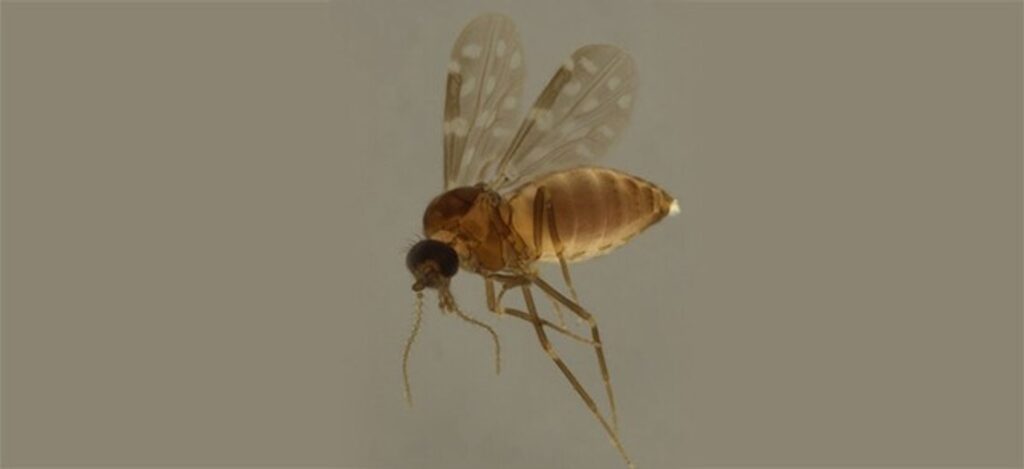
In this interview, Gabriele Nascimento discusses the study’s objectives, methodology, and main findings, highlighting the spatial distribution of Oropouche and Mayaro viruses in Brazil, their relationship with deforestation, and the challenges of strengthening epidemiological surveillance.
Could you explain how the concept for the study came about?
Our article stems from a context in which we were discussing arboviral diseases and the dengue epidemic—how endemic it was in 2024 and how that influences other arboviral diseases. As a result, our discussions within the research group led us to Felipe Naveca’s article on the Oropouche fever outbreak in the Amazon region. Consequently, we decided to conduct research to identify cases of Oropouche fever and Mayaro fever—other emerging arboviruses in our country—to better understand this situation. As we looked into this, we realized there wasn’t much information or many published articles available, so we decided to seek out data to better understand what was happening in our country. Based on this, we sought out data and realized that we did not yet have access to it because everything is still very new and very recent. Therefore, there is no structured data system for these diseases. We requested data on Oropouche fever and Mayaro fever from the Ministry of Health’s Health Surveillance System, and they sent us the data they had available.
Based on the data collected, what was presented and how was it analyzed?
The data we received covered cases of both conditions, from 2015 through January 2025. That was the data we used in our study. To briefly discuss the methodology, we initially conducted a descriptive analysis, since the data—which was still being organized—did not contain enough variables for us to use. So, we had few clinical and sociodemographic variables and chose to use only laboratory-confirmed cases. From this, we saw that the distribution was very similar between men and women and that the average age was 38 years—a more mature age group, then. Since we wanted to understand the broader picture of the situation—where these cases were occurring and whether they were limited to the Amazon Region, as had previously been reported—we performed a spatial analysis using Moran’s Global Index to determine the geographic distribution of these cases and whether there were clusters of high incidence in any specific locations within the country.
What were the main findings of the study?
For Mayaro fever, we found that the region with the most cases forming these clusters was the Amazon Region, including the Northern Region, which encompasses the states of Amazonas and Pará, as well as the state of Goiás. As for Oropouche fever, the region with the most clusters was known as AMACRO, which comprises the states of Amazonas, Acre, and Rondônia. However, in addition to these clusters, another cluster of Oropouche fever was identified in the Espírito Santo region. This shows us that, although the disease is widely distributed throughout the country, it still prevails in forested areas. With that in mind, we wanted to try to understand a little more about what might be causing this—whether this pattern was solely due to the vector’s habitat, which facilitated their proliferation there, or not. Because of this, we decided to conduct a bivariate analysis—a bivariate Moran’s index, which is essentially a relationship between two factors—to try to find some kind of correlation between them. To do this, we used the case rates for Oropouche and Mayaro, along with the percentage of deforestation in the Amazon region.
So, what did this other analysis reveal?
Based on the results of this analysis, we found an inverse relationship between deforestation and case incidence; thus, where deforestation is more intense, case incidence is lower. Our conclusion is that the lower incidence of these cases in these regions is due to the disruption of the vectors’ habitat. So, where there is deforestation, these vectors—these mosquitoes—are forced to leave that area and find a new place to proliferate. This causes them to leave forested areas and move to more urban regions, leading to this shift in case distribution. Although our study provides an overview—a broader picture—of cases across the country as a whole, further studies are still needed to understand how this distribution of vectors occurs, the type of transmission, and how it takes place, as well as to strengthen surveillance, given that the notification forms are still being developed, and the data collected by the Ministry of Health—all of which can help improve surveillance of these diseases. This study was conducted and supervised by Professor Dennis Armando Bertolini, Ph.D., who served as head of the Department of Clinical Virology within the Department of Clinical Analysis and Biomedicine at the State University of Maringá (UEM). Unfortunately, the professor passed away before this article was published. Our professor always encouraged us to pursue research focused on health and the population and to try to establish a connection between research, the university, and the community, making it accessible to those who truly need it. So, I would like to thank everyone who contributed to this work, but especially our professor, who has always been very fair, highly committed, and dedicated to ensuring that our work remains focused on the community and public health in general, and to communicating these findings in a simple, accessible way for the general public.